
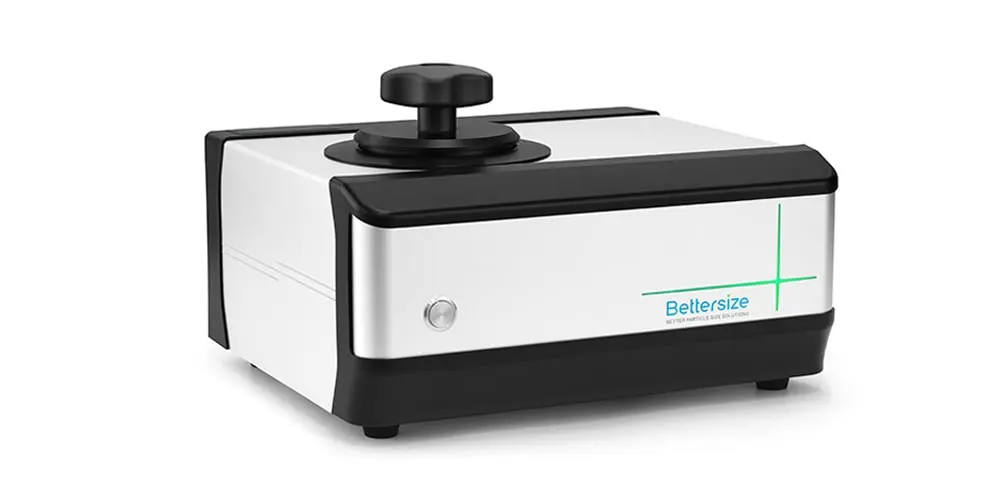
In materials science and industrial production, density is one of the main physical properties that characterize the quality and structure of a raw material. However, when measuring porous powders, granules or fibrous materials, conventional liquid displacement methods (for example, hydrostatic weighing) face serious problems: the liquid is often unable to penetrate the smallest pores, and some substances can dissolve or swell in the liquid. To solve these problems, the BetterPyc 380 was developed - an automatic gas pycnometer that uses inert gases to measure density. Since gas molecules are extremely small, they easily penetrate the smallest cracks and pores of the material, ensuring unrivaled accuracy.
The device operates on the Boyle-Mariotte (Boyle) shell and the gas displacement principle. The sample to be tested is placed in a sealed chamber of known volume, which is filled with helium or nitrogen to a certain pressure. The gas is then expanded into an additional reference chamber, and the pressure change is accurately recorded by highly sensitive sensors. Based on the resulting pressure differences, the device's computer instantly calculates the actual skeletal volume of the material. Since the sample mass is pre-weighed on an analytical balance, the density is generated automatically. The whole process takes just a few minutes and does not damage the sample at all, so the same material can be used for other tests after analysis.
One of the biggest advantages of the BetterPyc 380 is its integrated thermostatic system. Gas pressure and volume are extremely sensitive to temperature fluctuations, so even the slightest change in the laboratory air temperature can distort the pycnometer results. The advanced temperature stabilization technology implemented in this model allows you to maintain a constant temperature in the measuring chamber. This ensures that measurements taken in summer or winter will be perfectly reproducible. In addition, the device has an automatic internal calibration using certified reference balls, so the user does not need to perform complex mechanical procedures.
Flexibility is another strong point of this device. The BetterPyc 380 supports several measuring chambers of different volumes – from very small ones for expensive catalysts or pharmaceutical powders to large volumes for coarse granules, rocks or cement samples. Changing the chamber is simple, and the software automatically recognizes the configuration. The device also has a special mode for determining the closed-to-open-pore ratio of rigid foams (such as polyurethane), which is critically important for manufacturers of thermal insulation materials.
The software features an intuitive user interface and full process automation. The user only needs to enter the sample weight and press the start button. The system automatically performs the initial chamber purge (degassing) to remove moisture and other gases in the air, performs a set number of measurement cycles and provides statistical analysis. The data can be easily integrated into the factory's LIMS systems. The device fully complies with international standards, including ISO 12154, ASTM D4892 and USP <699>, which allows the density results obtained to be used in official quality certificates.
| Main specifications | Technical parameters |
| Measurement accuracy | up to 0.0001 g/cm³ |
| Reproducibility | ± 0.01 % |
| Analysis gases | Helium, Nitrogen, Clean dry air |
| Pressure sensor sensitivity | 0.0001 kPa |
| Temperature stability | ± 0.1°C |
| Compliance with standards | ISO 12154, ASTM D5550, USP <699> |
 EN
EN  LT
LT  LV
LV