

Biodiesel production pilot plant UPB/EV is designed to teach the principles of biodiesel production, including esterification, transesterification, washing and methanol regeneration processes. Biodiesel is a liquid fuel produced from renewable sources, such as vegetable oils or animal fats, and has many advantages over fossil fuels:
- Very low sulfur content (<0.001 ppm), which reduces the risk of acid rain.
- Dust emissions are reduced to 50 %.
- Does not contain benzene and other carcinogenic components.
- Due to its high flash point, it is not classified as a hazardous substance, making it safe to use.
- High level of bioavailability (no long-term environmental impact after spillage).
- Good lubricating properties, reducing engine wear.
- Closedness of the CO₂ cycle – burning releases the same amount of CO₂ as plants absorb during their growth.
Training opportunities:
- Transesterification of vegetable oil.
- Separation of glycerin.
- Biodiesel washing.
- Methanol regeneration.
Technical specifications (UPB/EV):
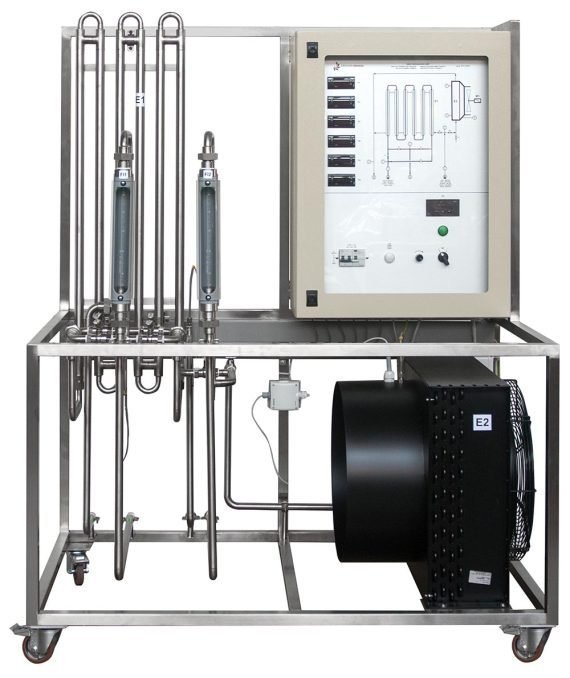
- Reactor: borosilicate glass and AISI 304 stainless steel, capacity – 18 liters, with motor-driven mixer and condenser.
- Heating system: electric heaters with thermostat.
- Reagent and catalyst container: borosilicate glass and AISI 304 stainless steel, with mixing system.
- Methanol recovery tanks: 2 borosilicate glass containers.
- Frame: AISI 304 stainless steel, with wheels.
- Control cabinet: IP55, CE compliant, with synoptic diagram and earth leakage protection device (ELCB).
- Dimensions: 1300 × 700 × 1900 mm.
- Weight: 180 kg.
- Power supply: 230 V, 50 Hz, single phase, 2 kVA.
- Water and compressed air: customer supplied.
Mod. UPBa/EV additional functions:
- PID controller with microprocessor and serial data communication card.
- Full automation, allowing you to control processes and monitor parameters in real time using Windows software.
Optional equipment:
- Screw press for extracting oil from seeds (mod. VIT/EV).




 EN
EN  LT
LT  LV
LV