
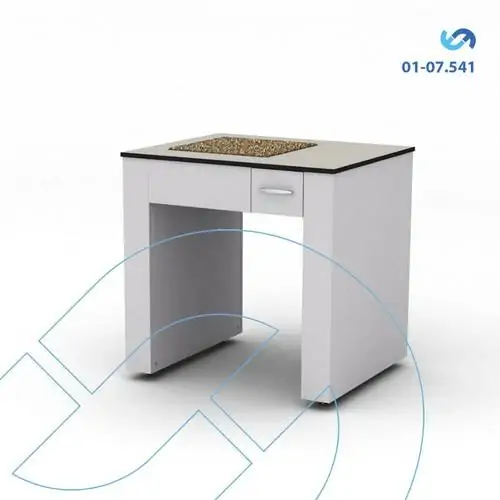
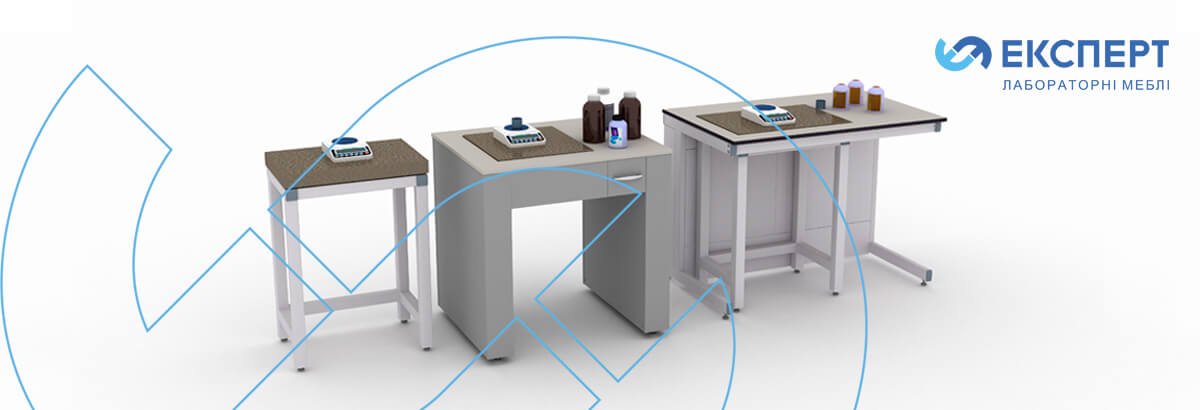
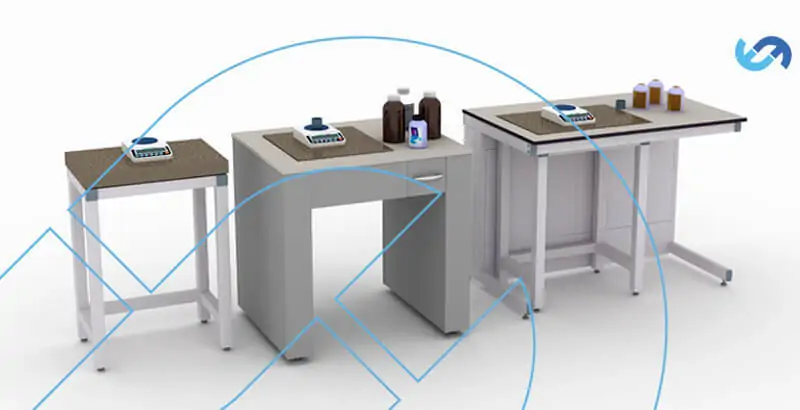
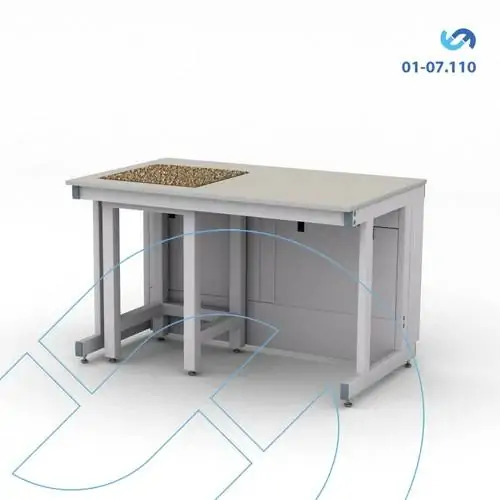
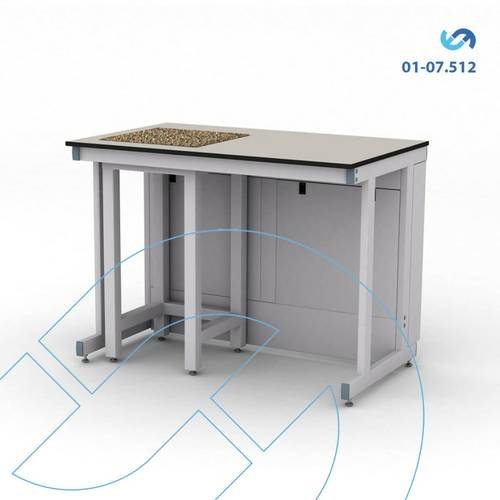

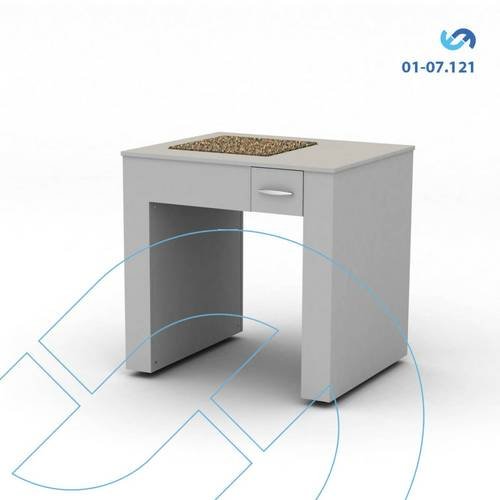
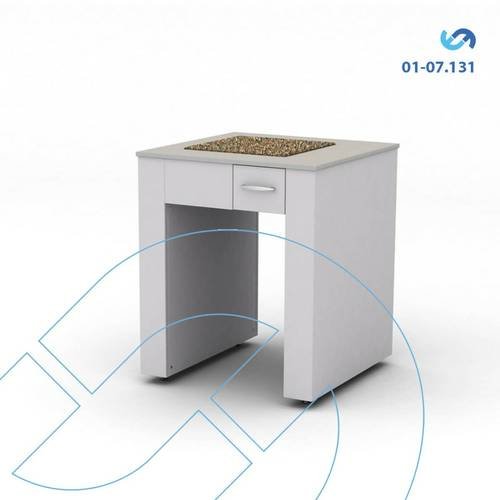
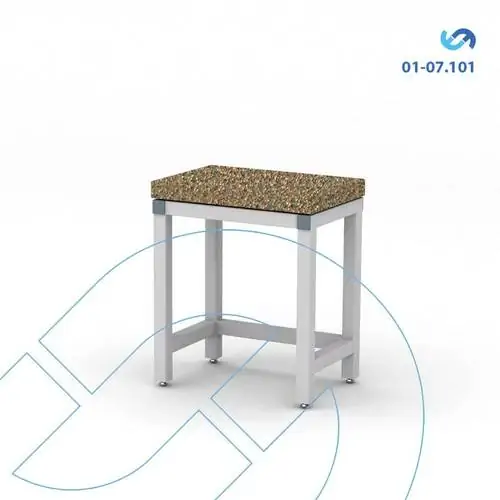
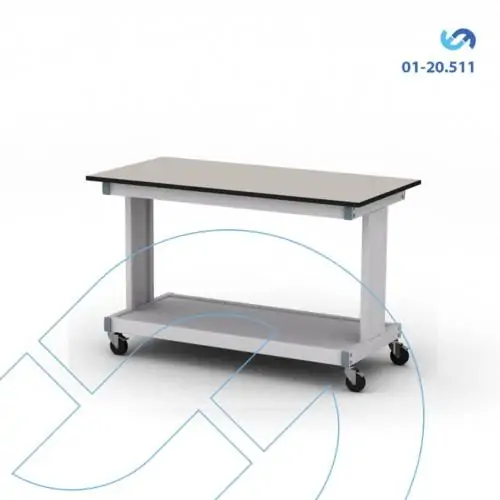
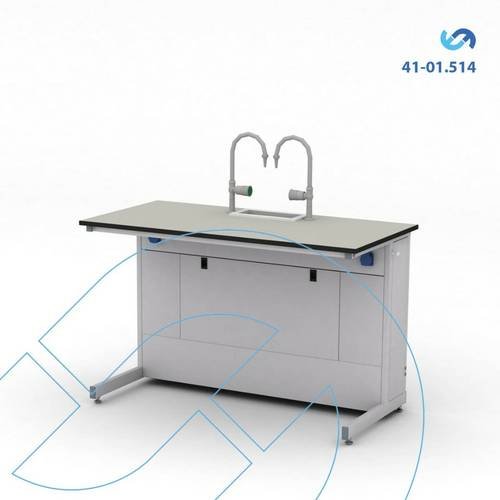
The anti-vibration laboratory table is designed for laboratory work where maximum accuracy is required. It is used with microscopes, analytical balances, chromatographs and other sensitive equipment. The structure is made of powder-coated metal with special anti-vibration elements that ensure the stability of the table.
Anti-vibration tables ensure that vibrations do not interfere with measurements or research. They are essential when working with sensitive equipment such as microscopes or analytical balances, as even small fluctuations in the environment can distort results.
These tables help maintain accuracy and ensure long-term reliability of the equipment. They are often used in conjunction with other laboratory furniture to create a seamless and ergonomic work environment. The choice of different table tops allows you to adapt the table to specific working conditions.
The countertops are customized to the type of work. You can choose from epoxy resin, quartz, ceramic or stainless steel surfaces. This ensures resistance to chemical reagents, temperature and mechanical stress.
Possible options
| Variants | Tabletop material | Construction | Adaptation |
|---|---|---|---|
| Standard anti-vibration | Epoxy resin | Metal frame with anti-vibration inserts | For analytical balances |
| Quartz anti-vibration | Artificial quartz | Reinforced metal frame | For chromatographs, microscopes |
| Stainless steel anti-vibration | Stainless steel | Metal frame with vibration dampers | For biological research |
| Ceramic anti-vibration | Ceramics | Sturdy metal construction | For chemical tests |
Anti-vibration tables ensure accurate results even when working in difficult environments. They can be equipped with additional cabinets or shelves.







 EN
EN  LT
LT  LV
LV